Search This Blog

Showing posts with label Theory. Show all posts

Friday, 14 February 2014

Trip to the BFI.

On Wednesday we visited the British Film Institute on the London Southbank. We visited yesterday as there was an event being held on how youth is interpreted through media and film. The day started with a presentation by Matthew Hall on the growth and change of teenagers and youth over the years as well as how film has shown this. There was then a screening of the film 'My Brother, The Devil.' followed by a Q&A with one of the producers, Julia Godzinskaya. Overall, the day was fantastic as it gave us an in depth look at how media and film portrays the young in society.


The lecture on youth in media.
This lecture, which was presented by Matthew Hall, focused on the way in which film and media present the youth and how that view has changed throughout the years. He started at the very beginning when the teenagers first began to appear. This was because before, children were expected to suddenly become adults with no transition in between. We then carried on to talk about how the new group of younger people wanted to break free of everyday life and enforce their new formed society on the people of Britain. The whole point of the lecture however, was to show how media is used to present this. An example used in the lecture was "Quadrophenia" which is a film that looks at the rivalry between the 'mods' and the 'rockers' in the 1960's. The clip is the same as we watched on the day. It's a good clip to look at as it shows the youth being rebellious and not caring for others in society. We then went on to look at how youth is presented in this day and age, and to put it bluntly, it was bleak. The example we looked at was kidulthood which looks at all the common problems which faces the youth nowadays, such as teenage pregnancy, bullying, drugs, sex etc.

My Brother, The Devil.
After the lecture and a break for lunch, we were presented with the film 'My Brother, The Devil.' which was a low budget film directed by Sally El Hosaini. It was related to what we had done before, as it had a large focus on youth growing up in lower class areas such as Hackney. It did a really good job at presenting youth in a variety of different ways. As well as covering the actual youth, it covered other things that a youth may face in any enviroment such as bullying, sexuality and so on. The film in itself was an amazing film especially with the budget that it had. To the right is a trailer of the film. After the film had finished, One of the producers, Julia Godzinskaya, came in for a Q&A about the film and what the message was behind it.  


Overall, I really enjoyed visiting the British Film Institute as I felt it gave me an insight into the message behind media and film and we got to watch a good film with a deep message.  


Tuesday, 26 November 2013

Transistions.

Transistions are really effective when it comes to media, they are used to switch between shots but there is many ways of doing this. Each different transistions can create a very different effect. In this post I will cover the basics about different transistions and what desired effect they create.


Cut.
A cut is the most simple kind of transistion which is just going from one shot to the other, without anything fancy inbetween. They are by far the most common transistion used. A few examples of the use of cuts are to be used to change the scene, compress time, vary the point of view or a montage to help build up the image.

Matched Cut.
A matched cut is when two shots are spliced together to get a sense of continuity. It can be used in a variety of ways, a few examples of this when an action is comleted, when theres a similar centre of attention in the frame, when theres a one step change of shot size or when theres a change of angle.

Motivated Cut.
This type of cut is used when the transistion is motivated by what the character actions. This can be through what the character is doing, hearing on any action he or she is doing. An example of this is if an actor is walking down a road and hears a noise, the shot will suddenly change to where the sound came from. This example is also known as a cutaway.

Other types of transistions
There are many types of transistions that are used but not so much, here's a quick list and description of these cuts.


Superimposition - This is where the shots merge together and the first one slowly disapears

Wipe - This is where the shot is wiped away to reveal the next shot.

Split Screen - This is where the screen splits into two or more, revealing more characters doing different things at the same time. This is usually used when two people are on the phone or in comical action scenes. An example of this is in Scott Pilgrim vs The World.


Monday, 25 November 2013

Editing.

Editing is a vital part of making any type of clip, may it be a film or a television programme. Without it the whole concept of the film will be ruined. In this post I will cover some of the main things you need when it comes to editing.


Match on action.
Match on action is essentially making the movement in the scene link between shots so it looks natural. We used this in our preliminary task. So if you wish to see an example have a look at that.

Continuity and Non Continuity.
This is similar to camera on action, and means that the scene is linked together to make it look believable. This could be used when two people are having a conversation. All the characters and props should be placed as they were in the previous frame to create the believable atmosphere. Non continuity is the opposite however. This is where the scene's realism is broken, for example with a montage to show lots happening in a vast amount of time but its short in the production. This is used mainly to get a juxtaposition effect.

Pace.
This means the rate at which the cutting happens, it is usually used to help present the tone of the particular scene. For example, if the is an action scene, the cutting rate will be quite fast and if there is a romantic scene the cutting rate will be fairly slow in comparison. Theres also cutting rythm that cuts along with the beat of the non diegetic music.

Inserts.
This is basically when you insert shots that werte filmed in a different location into the piece to give it a different feel. An example of this would be a pan of the New York skyline as this will make the audience assume that its filmed in New York, when infact the main piece could of been filmed anywhere with skyscrapers.

Special Effects.
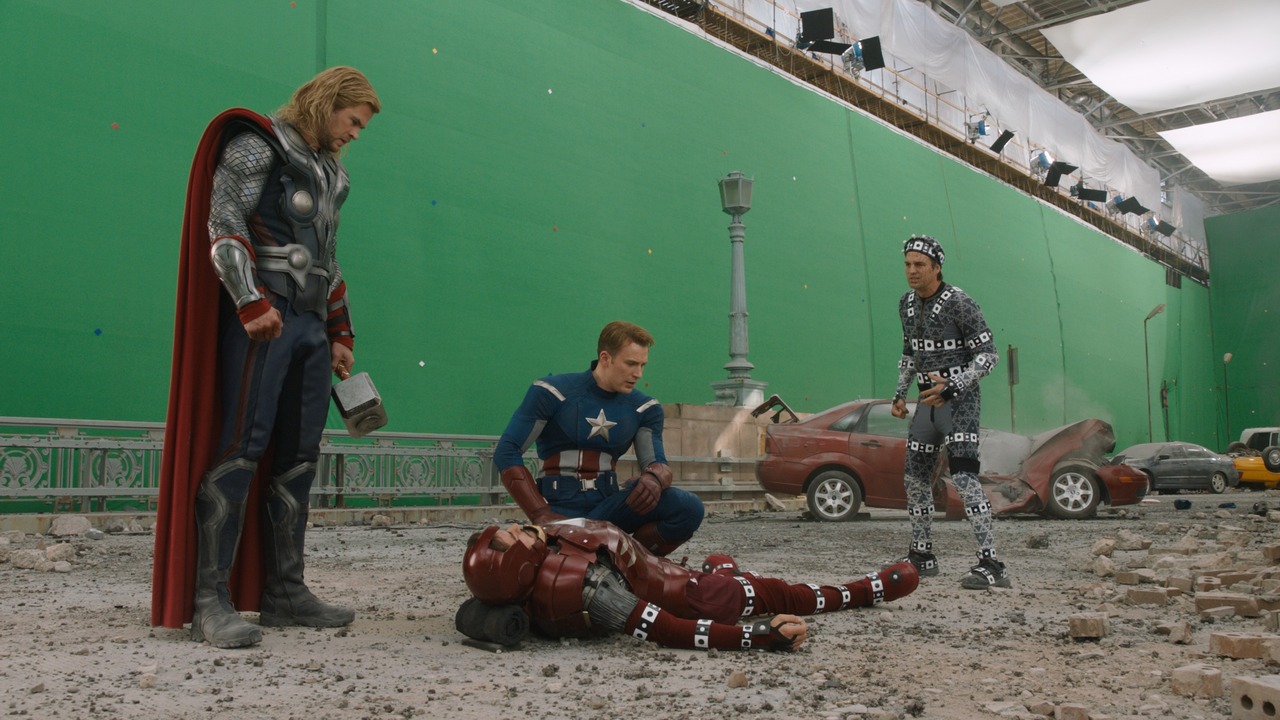
These are added in post production, and are added as they can't of been created in real life or on shooting day. An example of this would be a gun shot. A gun couldn't of been shot on the day probably, so the actor just pretends to and the smoke ir sparks are added afterwards. This is just a little example, special effects can be used on a much greater scale, usually using green or blue screens and can make up the setting if it couldn't be done in real ife. An example of a green screen being used is in avengers. The whole background is special effects, and The Hulk and most of Iron Mans costume is created using motion tracking.


Monday, 11 November 2013

Diegetic and Non Diegetic Sound.

Diegetic and Non Diegetic Sound is very simple. They are essentially the two different types of sound you here when watching a film or a TV programme. In this post I will talk about which each one is and some examples of them.

Diegetic Sound.
Diegetic sound is the sound which source can be seen in the scene. It's is also the sound of things that can't actually be seen but you can easily know that it is within the scene. The sounds are recorded either when the scene is actually being recorded or is put in after in post production using a foley stage, which is a room full of things to make sounds which can be interpreted into the scene. Some examples of this would be walking on gravel or an alarm clock going off. Most of the sound in a film or programme is diegetic.
Non Diegetic
Non diegetic sound is the sound which is not meant to come from the scene or is off screen. This is added afterwards on post production. They usually consist of sound effects added in like gunshots and explosions which obviously wouldn't of been able to been recorded on the day. Another example of type of Non diegetic sound is a soundtrack, which have to be added afterwards. The soundtrack is used to emphasise the feel of the film, for example a light hearted song would go with a quite qwerky scene. They are also used to set ambience. A soundtrack can be an actual music track or composed especially for the film or programme.

So in summary, Diegetic sound is sound which source can be seen or presented in the scene and Non diegetic sound is sound which isn't supposed to come from within the scene but from a source which isn't there.

Saturday, 14 September 2013

Camera shot analysis in Quadrophenia.

 In our lesson today, I looked at a scene from a film called 'Quadrophenia.' In this post, I will be analyzing some of the camera shots used in the scene and why the director chose to use them.


One effective shot which is used is this low angle shot. This shot is used because it emphasizes the height of the drop that the man is going to fall down. If the shot was in level with the people the drop wouldn't be seen as that high. It also emphasizes the danger that hes in as it is also a long shot, showing that there is no mean of escape.
In this part of the scene, a long shot is used to both set the scene and show the dominance of the mods compared to the rockers. Firstly, you can see a pier in the background so the viewer immediately knows they're by the sea, and some people might recognize it as Brighton pier, setting the scene even more precisely. Secondly, the shot shows the mods in a big group in a small formation type cluster which stretches across the back of the shot. Meanwhile the rockers are bunched together right next to the camera showing that there is a lot less of them, and emphasizing how outnumbered they are!


This last shot is also a low angle shot, which in this particular shot, presents dominance. With the horse being a tall, strong animal charging towards the camera presents both it and the policemen as the most powerful person in the scene. The camera shot being lower tan the horse, makes it seem even bigger than it is, making the dominance of it even greater. 


Tuesday, 10 September 2013

Camera Shot Analysis.

In movies, using different types of camera shots is crucial because you can tell a lot about what is happening or is going to happen as well as being able to tell the emotions of the characters. Of course, there are other ways in which camera shots enhance the whole production. But I will be focusing on these two main points. 


The shot above is taken from the film 'The Hunger Games'. This camera shot is known as the low angle shot. It is called this because the camera is looking up at something, which is usually a character. This presents the character as a superior character and that they have a lot of dominance. The director has used this shot here because you are looking at the main character, Katniss Everdeen, who at this point is caught in a life or death situation. However, the camera being underneath her shows that she is strong and dominant, therefore reassuring the viewer that she is going to survive. 

Another few types of camera shot are know as close ups. There are a few types of close up, these are Extreme close up, which tends to focus on their eyes, Big close up, which focuses on the whole face, a close up which is mainly the face but can also show you some of the scene and finally a medium close up in which you can see much more scenery. This example here, is taken from the movie 'Se7en'. This shot is a close up shot as you can also get an idea of the scene. Close ups are good as they can easily show what emotion the character is feeling. In this particular example, the character is distraught over the death of his wife. This can be seen as he has tears in his eyes and is struggling to hold it together. The camera shot makes this a lot easier to see as it is focused on his face and all his facial features. 


Yet another shot which is effective is the long shot. This shot lets the viewer see a lot of the setting rather than concentrating on the actual characters or characters. The setting is always key to set the tone of what's happening and that's why it is important to see every part of it. In this scene from the film 'The Hobbit: An Unexpected Journey' a lot of long shots are used so that The Shire, in which the scene is set can reflect the mood of the film at the time. At this point of the film, the mood is quite happy and The Shire is seen as quite a peaceful, tranquil place, which both are happy emotions. The long shot provides the viewer with a good look at it all so this feeling is greatly emphasized. 


Saturday, 7 September 2013

'Get Carter' car park scene analysis.

Earlier in the week we watched a short clip from the film 'Get Carter' (1971). The task at hand is to analyse what is being used for effect in this scene and why. Such things that influence this are the way the characters are presented and how the way the setting creates impact among other things.


One thing that I noticed was the positioning and stance of the three characters in the part of the scene shown to the right. The boss is easily recognizable from the two other businessman for a variety of reasons. One of which is that he is standing closer to the camera, from which I can infer that he is the more important character as more focus is put upon him. The way he is dressed also shows importance as it differs in color to the other men's suits, which are nearly identical to one another. The boss is also looking out the window, which can be also described as him looking over all that he owns, showing dominance. On the other hand the two other men are looking hard at work and productive to show that they are wishing to get on the good side of the boss.


Another notable thing used is the use of camera shots in the scene. In this particular camera shot below. You are looking over the soon to be dead businessman's shoulder and into the face of the main character. By doing this you are put in the shoes of the businessman so that you can relate to how he is feeling. The feelings are emphasized as the shot is only focused on the main characters face, which shows anger. This would intimidate the businessman and by using this shot, you feel slightly intimidated too.